
Fieldwork
2025 — Washington, Idaho & Oregon
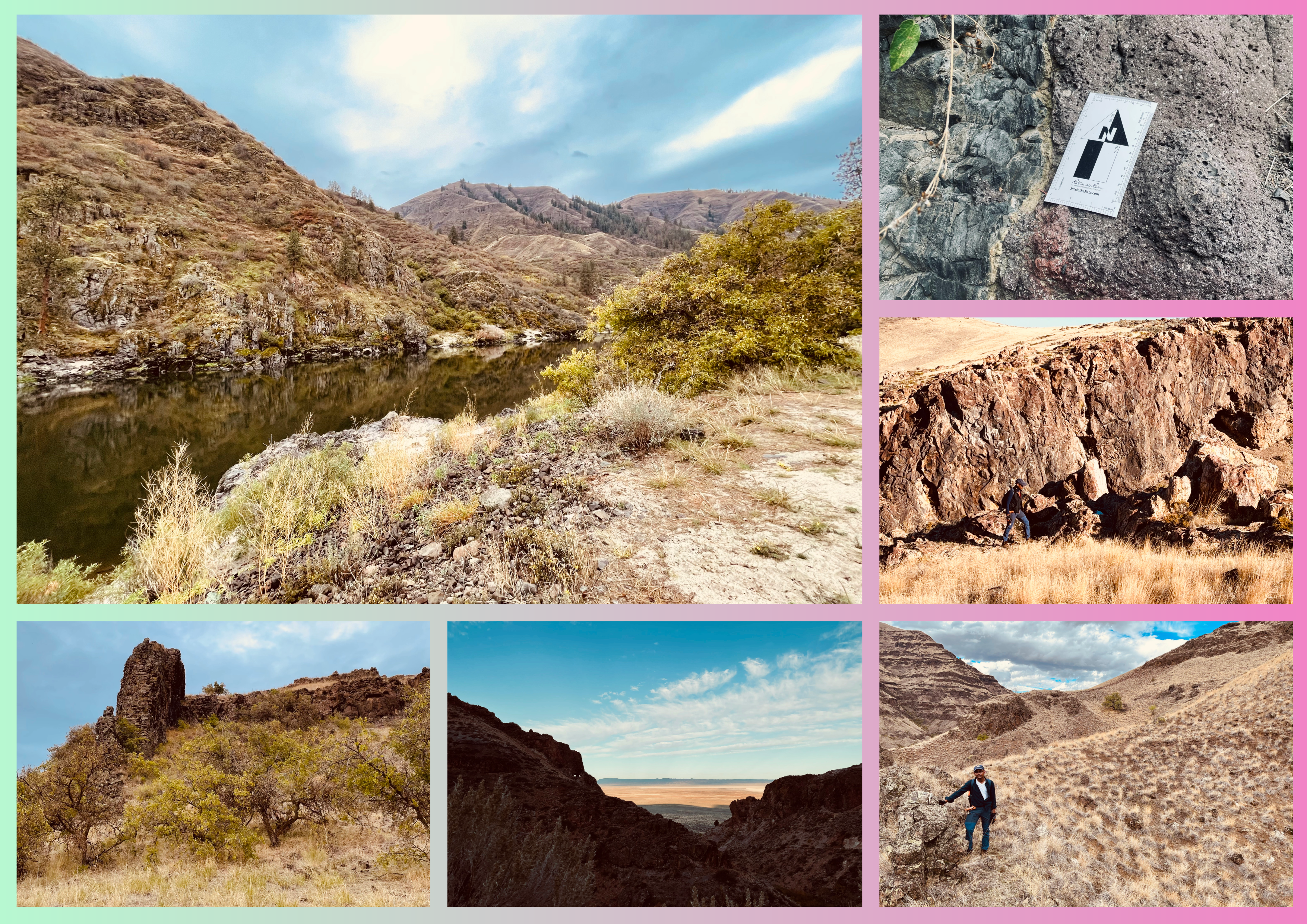
This field campaign targeted the Columbia River Flood Basalt Group (CRBG), one of Earth's best-preserved large igneous provinces, spanning its early, main, and waning eruptive phases (~17–8 Ma). We collected glassy samples from flow boundaries, dike margins, and vent deposits across this age range to capture the full temporal breadth of CRBG volcanism. These samples are being analyzed using iron XANES spectroscopy to reconstruct the redox evolution of CRBG magmas through time.
2024 — Wallowa Mountains, Oregon
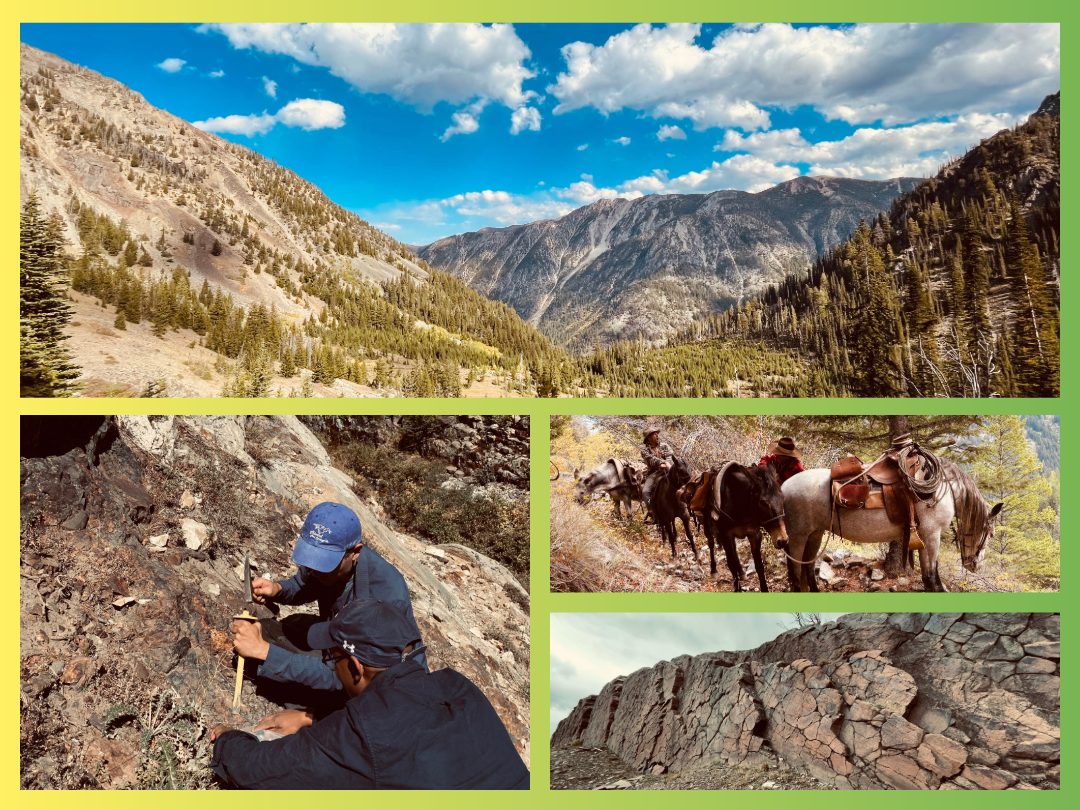
This field campaign was conducted in collaboration with the C2C (Cryptic Carbon to Climate) research group, with the goal of collecting volcanic glasses from Columbia River Flood Basalt Group dikes in the Wallowa Mountains. Sampling was carried out from a basecamp at Ice Lake, in one of the more remote and scenic corners of the CRBG. These samples contribute to ongoing investigations into the volatile budgets and carbon cycling of large igneous province magmatism.
2023 — Steens Mountain, Oregon
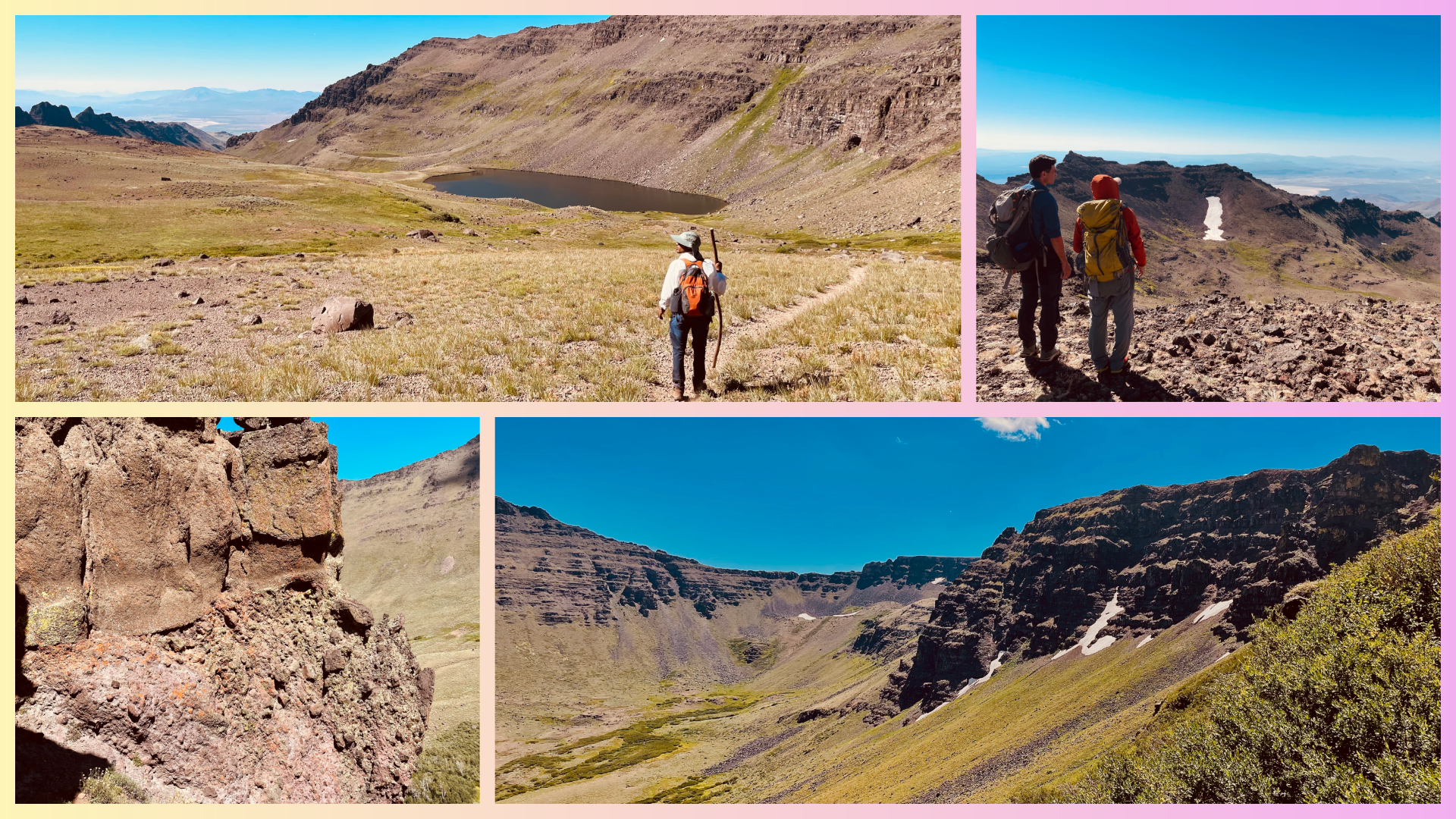
This reconnaissance campaign focused on the Steens Mountain section of the Columbia River Flood Basalts, one of the earliest and most complete records of CRBG volcanism. Using sample localities described in Moore et al. (2018) as a guide, we evaluated sites for future targeted sampling campaigns. Samples collected during this trip have since supported multiple research efforts, including studies of volatile contents in CRBG magmas and radiometric dating of the early eruptive sequence.
2022 — Connecticut
This field campaign targeted the Higganum and Fairhaven dikes of the Central Atlantic Magmatic Province (CAMP) in central Connecticut — remnants of one of the largest volcanic events in Earth's history, emplaced approximately 201 million years ago at the end-Triassic mass extinction boundary. Samples collected from these dikes have yielded the first quantitative estimates of sulfur and chlorine contents from fresh CAMP glasses, providing new constraints on the volatile output of this extinction-linked eruption.